




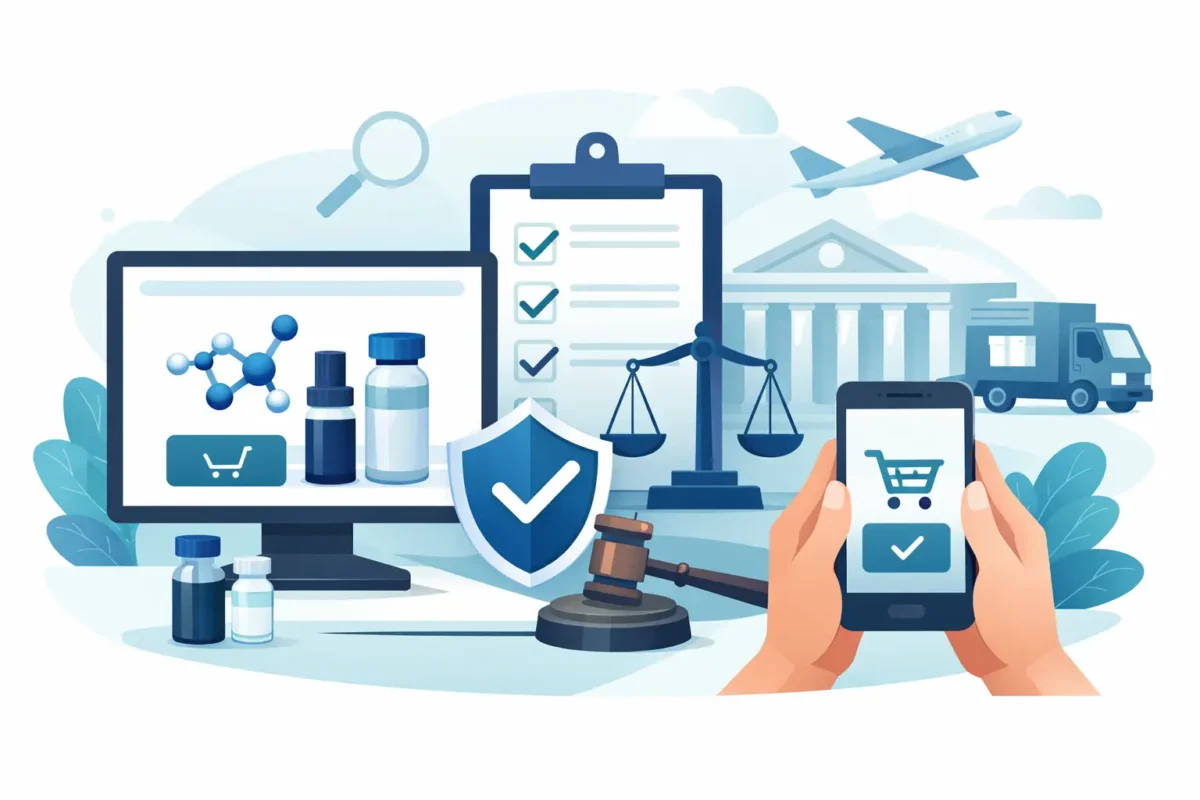
Ordering peptides is not complicated. Ordering them legally is where buyers need discipline. If you are looking into how to order peptides legally, the answer starts with use case, purchaser eligibility, and supplier compliance – not with product selection alone.
For research buyers in the United States and Canada, legality is tied to what the material is, how it is represented, who is buying it, and how it will be used. That is why serious procurement starts with documentation. A supplier can offer fast fulfillment and a broad catalog, but if its compliance language is vague or its testing records are missing, the legal risk shifts to the buyer.
How to order peptides legally starts with intended use
The first question is simple: are you ordering for legitimate research use only? That distinction matters. Many peptides are sold strictly for laboratory research, in-vitro investigation, analytical work, or other non-human applications. If a supplier clearly states research-use-only restrictions, that is not just a disclaimer. It is part of the legal framework that defines how the product can be sold and purchased.
Qualified buyers should be able to support the research context of the purchase. Depending on the vendor and jurisdiction, that may mean confirming age, institution, business identity, or independent research purpose. A serious supplier does not market research compounds as consumer wellness products, and a serious buyer does not treat them as such.
This is where many procurement mistakes happen. Buyers focus on the peptide name, purity percentage, or price per milligram, but skip the basic legal question of whether the order is consistent with a research-only transaction. If the intended use is not lawful and properly aligned with the seller’s terms, the rest of the order process does not matter.
Know who can buy and under what conditions
In practice, legal ordering depends on both the buyer and the vendor. Suppliers serving the US and Canada commonly restrict peptide sales to adults over a stated age threshold and may require buyers to acknowledge research-use-only terms before checkout. Some also structure their sales around laboratory, institutional, or qualified independent research settings.
That does not always mean a university purchase order is required. It does mean the transaction should fit a defensible research profile. If a site is written like a consumer supplement store, uses casual health claims, or avoids clear purchaser restrictions, that is a compliance warning sign.
Legitimate peptide sourcing should show controlled positioning. The catalog should be organized by research category, product specifications should be precise, and legal use limitations should be visible rather than buried. Compliance language that is hard to find usually signals weak internal standards.
Review product classification before you buy
Not every peptide sits in the same regulatory posture. Some compounds are widely recognized in research markets, while others may raise additional scrutiny based on their history, claims environment, or misuse potential. That means the legal analysis is not identical across all products.
Before placing an order, review how the supplier classifies the compound and how it is described. Product pages should avoid therapeutic claims, consumer outcome promises, or language that implies personal use. The safest purchase environment is one where the seller sticks to technical descriptors, batch data, concentration details, and research handling information.
If the listing blurs the line between lab material and end-user product, stop there. A compliant purchase starts with compliant representation.
Documentation is part of legal ordering
One of the clearest answers to how to order peptides legally is this: order only from suppliers that can document what they sell. At minimum, buyers should expect batch-level certificates of analysis and third-party analytical verification, typically HPLC and mass spectrometry data. Purity claims without accessible supporting records are not enough.
Documentation matters for two reasons. First, it supports identity and quality control, which is essential for reproducible research. Second, it demonstrates that the supplier is operating with traceable standards rather than informal inventory practices.
A certificate of analysis should match the actual batch being purchased. General claims about testing are weaker than downloadable, batch-specific records. Consistent lot documentation also helps if your procurement or internal compliance team needs to verify source material after the fact.
For many buyers, this is the dividing line between a research supplier and a speculative reseller. Synvia Peptides, for example, emphasizes third-party HPLC and mass spectrometry testing with downloadable COAs for each batch because documentation is not optional in a compliant research workflow.
Check the supplier’s compliance language carefully
A legal order is built on clear supplier policies. Before checkout, review the site’s terms around research use, age restrictions, shipping territory, and purchaser responsibility. This should be direct and easy to find.
Strong compliance language usually includes several features. The products are labeled for research use only. The vendor does not claim the compounds are intended for human consumption. Shipping is limited to jurisdictions the seller actively serves. The buyer is expected to understand and accept responsibility for lawful use.
There is a practical reason to read this material instead of clicking through it. If a supplier serves both US and Canadian buyers, cross-border fulfillment has to be handled with precision. A site that openly states where it ships, how it handles orders, and what restrictions apply is generally operating with more control than one that says almost nothing.
How to order peptides legally without creating avoidable risk
Once you have confirmed the research purpose, buyer eligibility, and supplier compliance framework, the actual ordering process is straightforward. Select the peptide or blend that matches your research protocol, verify the batch documentation, review the labeling and concentration, and confirm that the shipping destination is within the vendor’s approved service area.
At that point, the remaining legal risk usually comes from shortcuts. Buyers create problems when they order from anonymous vendors, ignore testing records, use personal-use language in communications, or treat research compounds as if they were ordinary consumer goods. Even if the material arrives, the procurement trail may still be indefensible.
A better standard is to maintain a clean record. Use accurate buyer information. Keep invoices, COAs, and order confirmations. Make sure internal storage and handling align with the product’s research designation. If you are buying on behalf of a lab or independent research operation, consistency in paperwork matters more than many buyers realize.
Red flags that should stop an order
The market makes it easy to find peptides. It does not make it easy to find controlled, compliant sourcing. A few red flags are worth treating as disqualifiers.
If the seller makes outcome-based body composition, anti-aging, or performance claims, that is a problem. If no third-party test data is available, that is another. If product descriptions are vague, batch numbers are missing, or purity claims are rounded marketing language rather than supported figures, the supplier is not giving you a professional procurement basis.
Shipping claims can also reveal weak controls. Unrealistic delivery promises, no mention of territorial restrictions, or no fulfillment standards at all suggest the operation may not be equipped for serious research supply. Fast shipping is useful, but only when paired with traceability and documented quality systems.
US and Canada buyers should expect some differences
Buyers often assume that legal ordering works the same way across borders. It does not. A supplier may serve both markets, but the exact shipping rules, purchaser acknowledgments, and product availability can vary. That does not necessarily indicate a problem. It usually reflects the reality of jurisdiction-specific compliance.
For that reason, legal ordering is partly about selecting vendors that openly support your market. If you are in the US, confirm domestic service terms. If you are in Canada, confirm that the supplier explicitly serves Canadian research buyers rather than shipping there informally. Cross-border ambiguity is rarely a sign of a mature operation.
What legal ordering looks like in practice
A compliant peptide order usually has a simple profile. The buyer is an adult and purchasing for legitimate research use. The supplier clearly states research-only restrictions. The product listing is technical rather than promotional. Batch-specific testing is available. The order is shipping to a supported jurisdiction, and the paperwork is retained.
That may sound basic, but basic is the point. Legal ordering is not about finding loopholes. It is about choosing suppliers and purchase conditions that can withstand scrutiny.
If you approach peptide procurement with that standard, the market becomes easier to filter. The best suppliers are not just selling compounds. They are providing documented materials, controlled fulfillment, and a compliance structure that helps research buyers order with confidence and keep their sourcing defensible long after the package arrives.