



A peptide COA that shows only one analytical method leaves a gap. For qualified research buyers, the question is not whether a batch was tested, but whether the testing can confirm both purity and identity with enough confidence to support repeatable work. That is where hplc vs mass spectrometry becomes a practical procurement issue, not just an analytical chemistry discussion.
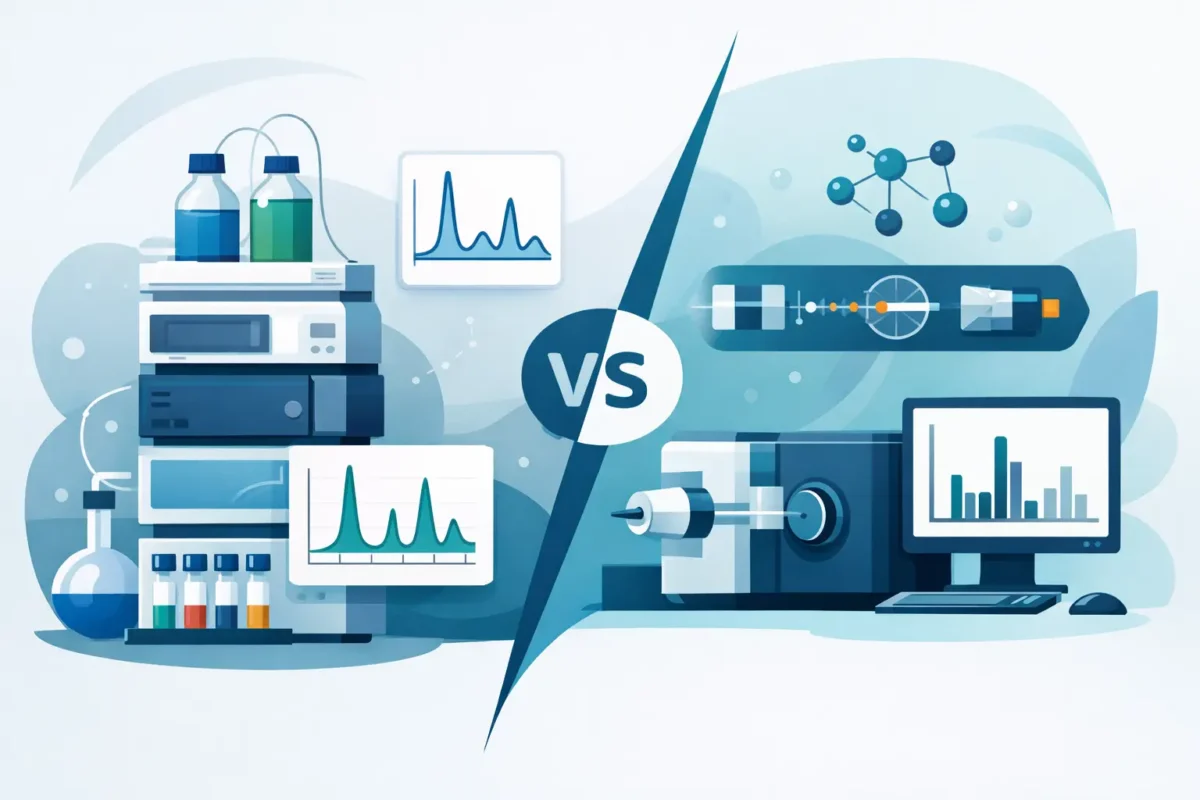
For peptide quality control, these methods do different jobs. HPLC is primarily a separation technique. Mass spectrometry is primarily an identification technique. They are often discussed as alternatives, but in real laboratory practice they are most useful when treated as complementary tools.
HPLC vs mass spectrometry in peptide testing
High-performance liquid chromatography separates components in a sample based on how they interact with the stationary phase and the mobile phase. In peptide analysis, that usually means a chromatogram with peaks that reflect the relative presence of the target compound and related impurities. If a supplier reports 99% purity by HPLC, that result generally means the principal peak accounts for about 99% of the measured chromatographic area under the stated method conditions.
Mass spectrometry measures mass-to-charge ratios of ionized molecules. In peptide testing, it is commonly used to confirm that the molecular weight of the main component matches the expected compound. Depending on the instrument and method, it can also provide fragment information, isotope patterns, and evidence of certain degradation products or sequence-related variants.
The distinction matters because purity and identity are not interchangeable. A sample can appear highly pure by HPLC and still be the wrong compound if the main peak has not been matched to the expected molecular mass. The reverse is also true. A sample can show the correct molecular mass by mass spectrometry while still containing meaningful levels of impurities that affect experimental consistency.
What HPLC tells you well
For routine peptide release testing, HPLC is often the first method buyers look for because it gives a direct picture of compositional cleanliness. If the chromatographic method is appropriate, HPLC can show whether the batch is dominated by one principal component or whether there are multiple detectable impurities, side products, or degradation peaks.
This makes HPLC especially useful for comparing batch-to-batch consistency. If two lots of the same peptide show similar retention time and similar purity profile under the same method, that supports sourcing confidence. For research buyers managing repeat procurement, this consistency is often just as important as the headline purity percentage.
HPLC also supports practical decision-making because the output is readable. A chromatogram can show peak shape, peak separation, and the presence of minor components. That visual record helps buyers evaluate whether a reported 99% figure reflects a clean separation or a less informative method.
Still, HPLC has limits. Retention time is not identity. Two different compounds can sometimes elute similarly, especially if the method is not optimized. Impurities may also co-elute with the main peak, making the sample appear cleaner than it actually is. Detection depends on the method, detector type, wavelength, and the chemistry of the analytes involved.
What mass spectrometry tells you well
Mass spectrometry addresses a different risk. It helps confirm that the detected material has the expected molecular mass of the intended peptide. For research buyers, this is critical when sourcing compounds with closely related analogues, truncated forms, deletion sequences, or synthesis-related byproducts.
A correct mass spectrum adds a layer of identity control that HPLC alone cannot provide. This is particularly relevant in peptide procurement because minor sequence changes can produce materially different research outcomes while still generating a reasonably clean chromatogram.
Mass spectrometry is also more sensitive in many contexts. It can detect low-level species that are difficult to interpret with standard chromatographic detection alone. In advanced workflows, tandem mass spectrometry can provide further structural confidence by examining fragmentation behavior. That said, many ecommerce buyers are reviewing batch verification documents, not running full characterization studies. In that setting, the practical value is straightforward: MS helps verify that the supplier is not relying on purity data alone to represent quality.
Mass spectrometry has its own limitations. A correct molecular weight does not prove high purity. Isobaric or near-isobaric species may still complicate interpretation. Signal intensity is not a direct substitute for quantitative impurity profiling unless the method has been validated for that purpose. In other words, MS can confirm what the main molecule likely is, but it does not replace chromatographic separation when the question is how clean the sample is.
Why qualified buyers usually need both
For peptide sourcing, the strongest quality position is not HPLC or mass spectrometry. It is HPLC and mass spectrometry, supported by batch-level documentation. One method answers whether the sample is compositionally clean under defined conditions. The other helps confirm whether the principal component is the intended molecule.
This combined approach reduces avoidable uncertainty. If a batch reports 99%+ purity by HPLC and also shows the expected molecular mass by MS, the buyer has stronger evidence that the material is both predominantly clean and correctly identified. That does not eliminate all analytical risk, but it is a materially better basis for procurement than relying on one test alone.
For research-use-only compounds, this matters because reproducibility starts before the experiment begins. If source material varies in purity profile or identity confirmation, downstream interpretation becomes less reliable. Procurement teams and independent research buyers alike benefit from suppliers that make these controls visible rather than implied.
How to read a COA with HPLC and MS data
When reviewing a certificate of analysis, the first question is whether the analytical methods are named clearly. A useful COA should identify the test performed, the batch or lot, and the result. If purity is reported by HPLC, look for the purity percentage and whether the chromatogram is available. If identity is reported by mass spectrometry, look for the observed mass and whether it matches the theoretical value.
The second question is whether the documentation is batch-specific. Generic example reports are less useful than lot-linked records. Research buyers need evidence tied to the exact material being purchased.
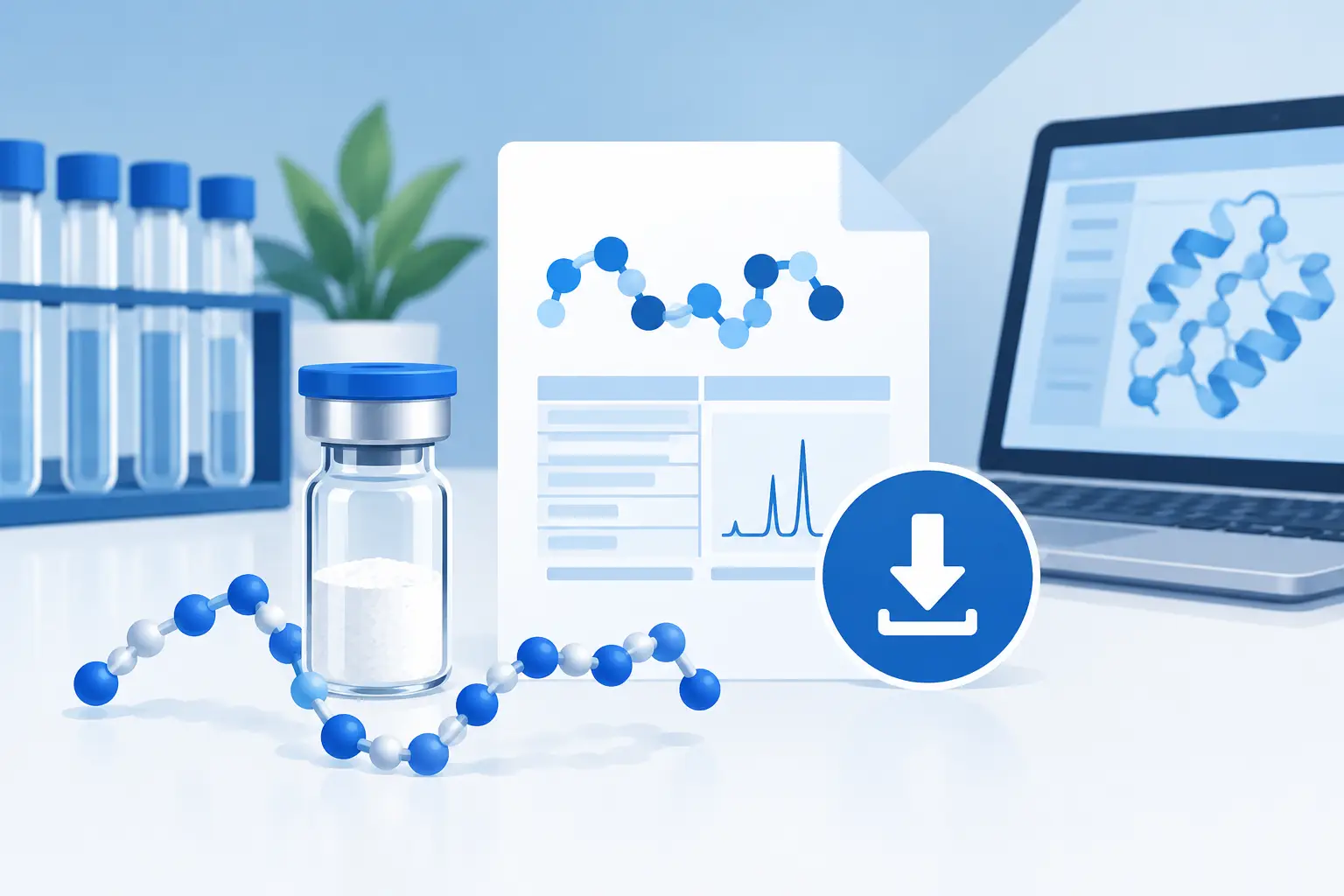
The third question is whether the data set looks complete enough for the claim being made. A vendor claiming analytical rigor while providing only a purity percentage without chromatographic context or identity confirmation is asking the buyer to fill in too many blanks. By contrast, a supplier that provides third-party HPLC and mass spectrometry results, with downloadable COAs for each batch, is operating with a higher level of transparency. That standard is part of how Synvia Peptides approaches documented quality control for qualified laboratory buyers.
HPLC vs mass spectrometry is the wrong final question
The better question is which method answers which risk. If the concern is impurity burden, HPLC is usually the more direct tool. If the concern is molecular identity, mass spectrometry is usually the more direct tool. If the concern is procurement confidence, neither method should stand alone when both are reasonably available.
This is especially true for peptides used in specialized research categories where analogues, blends, and sequence-sensitive outcomes can make sourcing errors expensive. A technically literate buyer should expect method-specific evidence that supports the claims being made about the material.
There is also a practical procurement angle. Suppliers that consistently provide both forms of verification are usually demonstrating more than analytical capability. They are signaling process maturity, batch control, and a willingness to document quality in a way that supports repeat orders. That reduces friction for buyers who need dependable sourcing rather than marketing language.
A clean purchasing decision usually comes from simple standards. Ask whether the batch shows strong chromatographic purity. Ask whether the molecular identity is confirmed by MS. Ask whether the COA is downloadable, batch-specific, and current. If those answers are clear, the rest of the sourcing conversation becomes much easier.
The most useful mindset is to treat analytical data as a control system, not a sales feature. When a supplier can show both separation-based purity and mass-based identity for the exact batch being shipped, you are not buying assumptions. You are buying evidence that fits the way serious research should be sourced.