




A peptide can meet a high purity specification at release and still lose analytical integrity before it reaches the assay. Learning how to prevent peptide oxidation is therefore not a single storage instruction. It is a controlled workflow covering receipt, storage, reconstitution, handling, and verification against a defined analytical standard.
For research laboratories, oxidation control protects more than the material itself. It supports reproducible results, reduces unexplained assay variability, and helps separate a true biological finding from a degradation artifact. The appropriate controls depend on peptide sequence, formulation, concentration, solvent system, and intended in-vitro workflow.
Why Peptide Oxidation Occurs
Oxidation is a chemical modification caused by exposure to reactive oxygen species, dissolved oxygen, light, elevated temperature, trace metals, or incompatible solution conditions. Certain residues are more susceptible than others. Methionine, cysteine, tryptophan, tyrosine, and histidine can be particularly sensitive, although the full sequence and local peptide structure determine actual risk.
A common example is methionine oxidation, which can produce a mass increase of approximately 16 Da. Cysteine-containing peptides introduce additional considerations because oxidation can alter thiol chemistry and promote disulfide-related species. These changes may appear as new or enlarged peaks during chromatographic analysis, altered mass spectral data, or a decline in the main peptide peak.
Oxidation risk rises after reconstitution. In a lyophilized state, a peptide is generally more stable than it is in solution, but lyophilized material is not immune to degradation. Repeated exposure to humid room air, improper container closure, excessive heat, or prolonged light exposure can still compromise dry material over time.
How to Prevent Peptide Oxidation During Storage
Storage conditions should be set from the supplier documentation and the peptide’s specific stability profile, not from a universal temperature rule. Keep each batch in its original, tightly sealed vial whenever practical, and review the certificate of analysis, handling information, and any compound-specific storage guidance before use.
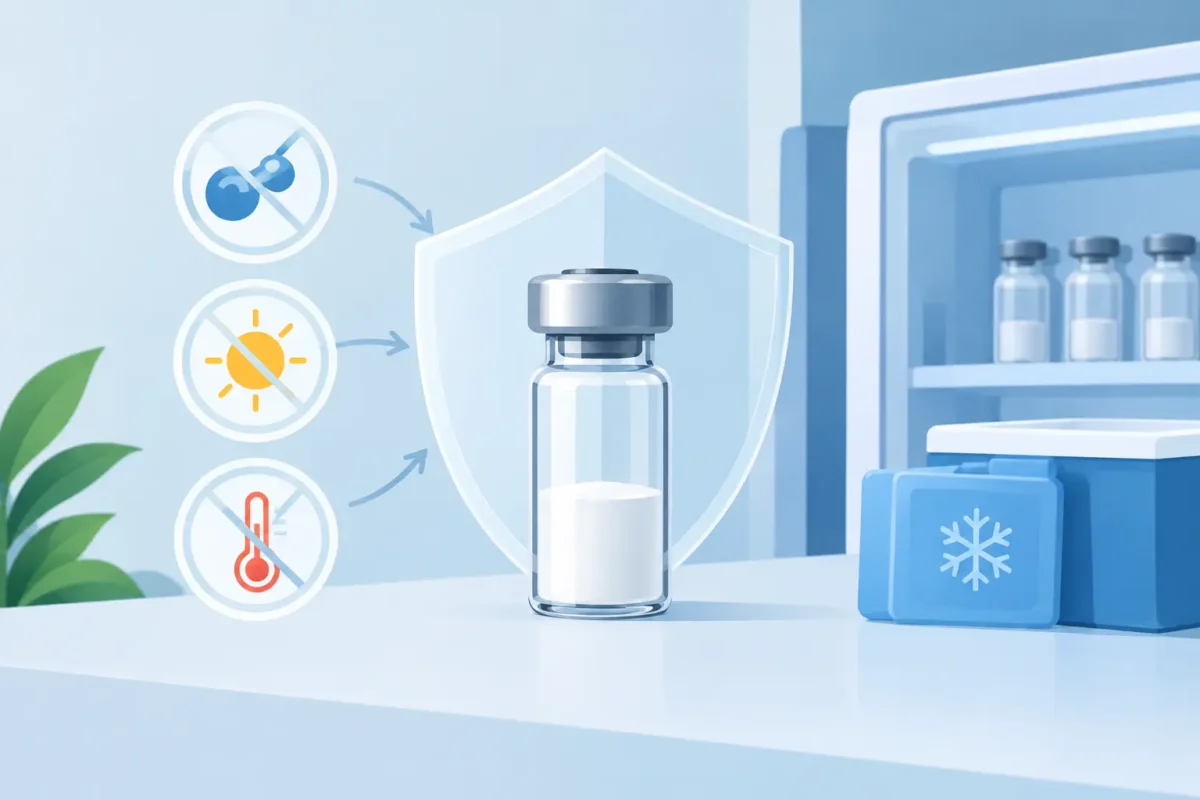
For most research workflows, the first objective is to minimize heat, moisture, light, and unnecessary access to the vial. Store lyophilized peptides at the specified temperature and protect them from direct light. If a vial has been moved from cold storage, allow it to equilibrate to room temperature before opening. Opening a cold vial can draw moisture from ambient air into the container through condensation.
Use a defined inventory process. Record the batch number, receipt date, storage location, vial-opening date, and reconstitution date. This creates a practical chain of control when an unexpected analytical result needs investigation. It also prevents avoidable use of material that has been repeatedly removed from storage without a documented reason.
Avoid assigning one large vial to frequent use. When a study design permits, prepare smaller, validated aliquots so the primary stock remains sealed. This reduces both atmospheric exposure and freeze-thaw stress. Aliquot size should match anticipated experimental demand rather than convenience alone. Very small aliquots can increase handling losses and labeling errors, while oversized aliquots may still be repeatedly thawed.
Control the Reconstitution Environment
Reconstitution is often the highest-risk step because it introduces solvent, dissolved gases, container surfaces, and handling time. Use only the solvent system and concentration range appropriate to the compound and study method. A solvent that appears compatible by visual inspection may still accelerate chemical change or affect downstream assay performance.
Water quality matters. Use laboratory-grade water and validated buffers appropriate for the intended research application. Buffer pH should be selected with the peptide’s sequence and known stability behavior in mind. Extreme or poorly controlled pH can increase degradation pathways, including oxidation, deamidation, and hydrolysis.
Prepare solutions promptly and avoid prolonged bench exposure. Gentle mixing is generally preferable to aggressive vortexing when the material does not require it, as excessive agitation can increase air-liquid contact and foam formation. Do not assume that every peptide requires oxygen-free handling. Nitrogen or argon headspace control may be justified for a known oxidation-sensitive peptide, but it should be incorporated through a documented method rather than applied as a generic precaution.
Trace metals can catalyze oxidation in some formulations. Use clean, compatible labware and avoid transferring peptide solutions through unverified containers. If a chelating agent, antioxidant, or other stabilizing excipient is under consideration, assess it against the study protocol first. Such additions can alter peptide behavior, analytical recovery, receptor interactions, or cell-based assay results. A stabilization strategy that preserves the main peak but changes the research system is not a successful control.
Separate Stocks From Working Solutions
Maintain a clear distinction between primary stock, intermediate dilution, and working solution. The primary stock should be accessed as infrequently as possible. Prepare working solutions close to the time of use and discard them according to the laboratory’s validated hold-time procedure rather than returning partially used material to the primary vial.
This separation limits contamination and prevents a common source of uncertainty: a primary stock with an unknown number of temperature cycles and room-temperature exposures. For oxidation-sensitive sequences, that history can be as relevant as the nominal expiry date.
Protect Peptides From Light and Freeze-Thaw Cycling
Light protection is a low-effort control with meaningful value for light-sensitive compounds. Use amber vials when compatible with the workflow, keep vials in opaque secondary containers, and limit exposure to direct laboratory lighting during preparation. The goal is controlled handling, not unnecessary complexity.
Freeze-thaw cycling should also be minimized. Repeated thawing can expose a solution to changing temperature, condensation, oxygen exchange, and variable mixing conditions. Aliquoting is the primary solution, but it must be done under conditions that preserve traceability. Every aliquot should retain a clear link to the original batch and preparation record.
Avoid assuming colder is always better. Some solvent systems can freeze unevenly, concentrate solutes during freezing, or create container-related issues. The correct temperature depends on the peptide, solvent, vial type, and planned storage duration. Follow the material-specific recommendation when available, then confirm suitability through the laboratory’s own stability checks for critical studies.
Verify Integrity With Analytical Controls
A certificate of analysis confirms the characteristics of a released batch under stated test conditions. It does not replace stability assessment after reconstitution or extended storage in a laboratory-specific solvent system. For work where material integrity is outcome-critical, establish time-zero characterization and compare retained samples at defined intervals.
Reverse-phase HPLC can reveal loss of the primary peak, new impurity peaks, or shifts in peak profile. Mass spectrometry can help identify mass changes consistent with oxidation and distinguish them from other degradation pathways. Use the same analytical conditions for baseline and follow-up samples whenever possible, including column, mobile phases, detection settings, and sample preparation.
Set acceptance criteria before the study begins. Depending on the method, these may include main-peak area, impurity profile, retention-time consistency, mass confirmation, appearance, and solution pH. The criteria should reflect the study’s risk level. Exploratory screening may require a different control package than a quantitative assay intended to compare results across multiple weeks or batches.
When an unexpected degradation signal appears, investigate the full handling record. Review storage temperature, light exposure, vial access frequency, solvent identity, buffer pH, lot history, and time in solution. Replacing material without identifying the likely failure point can allow the same problem to recur.
Build Oxidation Control Into Procurement
Oxidation prevention starts before a vial enters the laboratory. Source research peptides with batch-specific identity and purity documentation, clear storage instructions, and analytical data that support incoming-material verification. Third-party HPLC and mass spectrometry testing provide a stronger baseline for evaluating material at receipt than an unsupported purity claim.
At Synvia Peptides, batch-level documentation and research-use-only controls are designed to support qualified buyers who require traceable research materials. Still, laboratory handling after delivery remains part of the integrity chain. Even a 99%+ purity starting material requires appropriate storage and method-specific stability control once it is placed into a research workflow.
The most useful practice is not a single precaution but a disciplined record of conditions. When peptide sequence, solvent, storage history, and analytical results can be reviewed together, oxidation becomes a manageable experimental variable rather than an unexplained source of lost data.