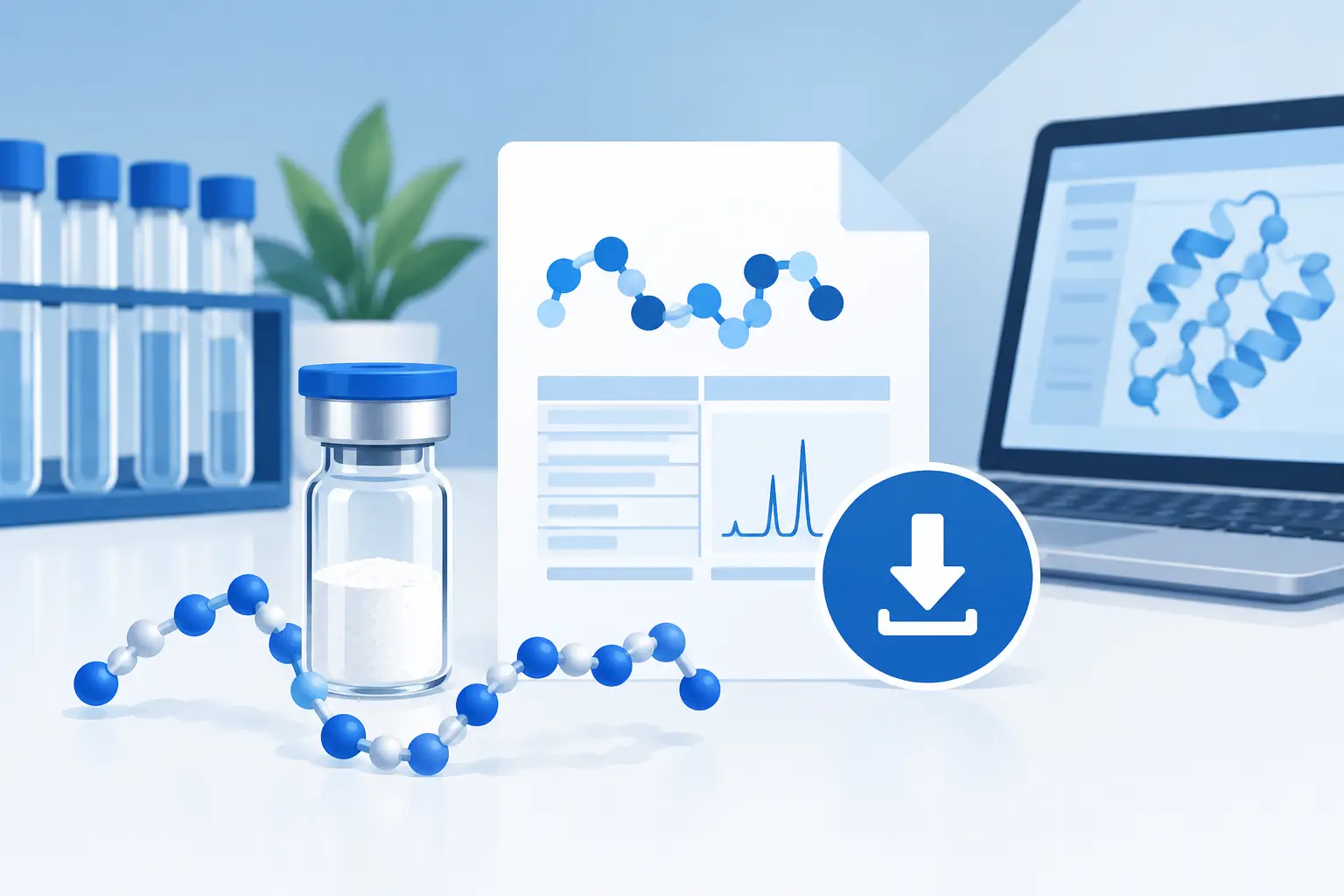





A missing certificate of analysis can stop a research workflow before a vial is ever opened. For procurement teams and independent investigators, the question is not simply can laboratories buy peptides online. The more relevant question is whether an online supplier can provide the documentation, traceability, and research-use compliance required to support reproducible work.
The answer is yes, qualified laboratories can purchase research peptides online in the United States and Canada when the supplier, purchaser, intended use, and product handling align with applicable requirements. Online ordering can simplify sourcing, but it does not remove the buyer’s responsibility to verify material quality or to confirm that the compound is appropriate for the planned in-vitro or laboratory research protocol.
Can Laboratories Buy Peptides Online?
Laboratories may purchase peptides through online research-chemical suppliers when the products are sold and acquired strictly for legitimate research purposes. Reputable suppliers make this scope clear: products are designated for research use only and are not offered as drugs, dietary supplements, foods, cosmetics, or materials for human or veterinary use.
This distinction matters. A peptide offered for laboratory research is not the same as an approved therapeutic product, even when its name resembles a compound discussed in clinical literature. Research buyers should maintain clear internal separation between investigational materials and any substances intended for diagnostic, clinical, compounding, or therapeutic use.
Purchaser qualification policies vary by supplier. Some vendors serve institutional laboratories, while others also accept orders from qualified independent research settings. In either case, the buyer should be prepared to provide accurate ordering information, comply with age and institutional requirements, and accept the supplier’s research-use-only terms.
The Documentation Standard That Matters
A product page alone is not sufficient evidence of quality. Laboratories should expect documentation that connects the item ordered to a specific, testable batch. The central record is the certificate of analysis, or COA.
A useful COA identifies the product, lot or batch number, assay result, analytical method, test date, and relevant handling or storage information. For synthetic peptides, high-performance liquid chromatography and mass spectrometry are common analytical tools. HPLC can provide a purity profile under stated test conditions, while mass spectrometry helps confirm that the observed molecular mass is consistent with the intended compound.
Neither document should be read in isolation. A reported purity percentage is meaningful only when it is tied to a defined batch and analytical method. Buyers should also evaluate whether the supplier makes batch-level records available before or at the time of purchase, rather than providing only broad marketing claims about quality.
Synvia Peptides supports this standard with downloadable batch-specific COAs and third-party HPLC and mass spectrometry testing for its research catalog. That level of visibility helps a buyer compare documentation against internal acceptance criteria before materials enter a study.
What a Laboratory Should Verify Before Ordering
Before placing an online peptide order, procurement personnel should confirm four practical points:
- The material is clearly labeled for research use only, with no claims that imply human or veterinary administration.
- A batch-specific COA is available and includes the identity, analytical results, and lot information needed for receiving records.
- The supplier states its testing approach, purity standard, storage guidance, and fulfillment procedures in clear terms.
- The purchaser’s intended use, institution policy, and local requirements permit acquisition and handling of the material.
These checks are basic, but they address the most common source of procurement friction: a product that appears suitable online but cannot satisfy internal documentation, quality, or compliance review.
Purity Is Necessary, but It Is Not the Entire Decision
A 99%+ purity claim is often an appropriate starting benchmark for research-grade peptide sourcing. It is not, by itself, a complete qualification standard. Laboratories should consider the compound’s intended application, the sensitivity of the assay, the expected concentration range, and the potential impact of peptide-related impurities, residual synthesis materials, salts, or degradation products.
For exploratory screening, a documented research-grade material may fit the protocol. For highly sensitive analytical work, mechanistic studies, or experiments where minor impurities could affect interpretation, the laboratory may need additional specifications or orthogonal testing. The right threshold depends on the work, not just the catalog label.
Batch-to-batch consistency is equally relevant. A peptide may meet its stated purity target while still presenting a different impurity profile than a prior lot. When continuity matters, laboratories should record lot numbers, retain COAs with project files, and determine whether bridging or verification testing is needed when a new batch is introduced.
Compliance Begins With the Intended Use
Research peptides can be ordered online for legitimate laboratory investigation, but their legal and operational status depends heavily on how they are represented, stored, distributed, and used. Buyers should not purchase research peptides for personal use, self-administration, patient treatment, animal administration, or resale for those purposes.
This applies across peptide categories, including hormone and growth-axis compounds, immune and bioregulator peptides, metabolic and GLP-1 analogues, CNS-focused compounds, and tissue-repair research materials. A compound’s popularity or visibility in wellness discussions does not change its research-only status when sold through a research chemical supplier.
Institutional researchers should also follow internal environmental health and safety procedures, chemical hygiene plans, and inventory controls. Independent research buyers need comparable discipline: secure storage, accurate labeling, controlled access, appropriate waste handling, and documentation of receipt and use. An online transaction does not eliminate these core laboratory responsibilities.
US and Canadian Purchasing Considerations
Online peptide suppliers may serve both US and Canadian research buyers, but availability, shipping practices, and purchaser obligations can differ. Cross-border orders can involve additional timing, customs, and documentation considerations. Buyers should confirm that their shipping address, intended use, and receiving procedures are consistent with the supplier’s stated service area and policies before checkout.
For organizations with formal procurement systems, the practical question is often whether the supplier can satisfy vendor onboarding requirements. Requested records may include COAs, product specifications, invoices, lot identifiers, safety information, and supplier contact details. A vendor that provides these materials consistently reduces avoidable delays in purchase approval and receiving.
How to Evaluate an Online Peptide Supplier
The strongest suppliers are transparent where it counts. They identify products accurately, distinguish research compounds from consumer goods, publish their quality framework, and avoid medical claims. Fast fulfillment is valuable, particularly when a study depends on a narrow timeline, but it should never replace analytical documentation.
Look for clarity around fulfillment windows, packaging expectations, storage recommendations, and support for batch-specific records. A supplier’s catalog breadth can also matter when a laboratory works across multiple research areas, since consolidated sourcing may simplify documentation and ordering. However, broad selection should not be mistaken for proof of quality. Each compound and lot still requires its own review.
Be cautious with vendors that offer vague purity statements, generic COAs without identifiable lot numbers, inconsistent naming, or language that encourages use outside a controlled research environment. Those signals can indicate a weak quality system or a misalignment with laboratory compliance expectations.
Build Verification Into Receiving, Not Just Purchasing
A defensible process continues after checkout. On receipt, compare the product label, quantity, and lot number with the order record and COA. Document the date received, storage location, responsible personnel, and any observed packaging concerns. If the material is temperature-sensitive, record condition on arrival according to the laboratory’s standard operating procedure.
For studies with higher consequence or longer duration, retain a reference aliquot where appropriate and establish a procedure for evaluating new lots. This creates a traceable record when results need to be reviewed months later. It also prevents a common mistake: attributing an unexpected experimental outcome to biology when the underlying material or lot history was never adequately documented.
Online purchasing is most effective when treated as one part of a controlled sourcing system. Qualified buyers should select suppliers that communicate clearly, verify every batch, respect research-only boundaries, and provide the records that make responsible laboratory work easier to defend.